Peer-Reviewed Article · Aug 21, 2025
Predictors of willingness to support and engage in nonviolent civil disobedience to defend the climate
By Patrick Owusu Ansah, Nicholas Badullovich, Teresa Myers, John Kotcher, Seth Rosenthal, Anthony Leiserowitz and Edward Maibach
Filed under: Behaviors & Actions
We are pleased to announce the publication of a new article, “Predictors of willingness to support and engage in nonviolent civil disobedience to defend the climate,” in the journal npj Climate Action.
Climate change, caused mainly by burning fossil fuels like oil, gas, and coal, is creating a growing global crisis that threatens people’s health, safety, and the natural environment. Yet despite urgent warnings from scientists—such as those in the 2023 United Nations climate report—the U.S. and other major countries continue to produce and burn fossil fuels at high levels.
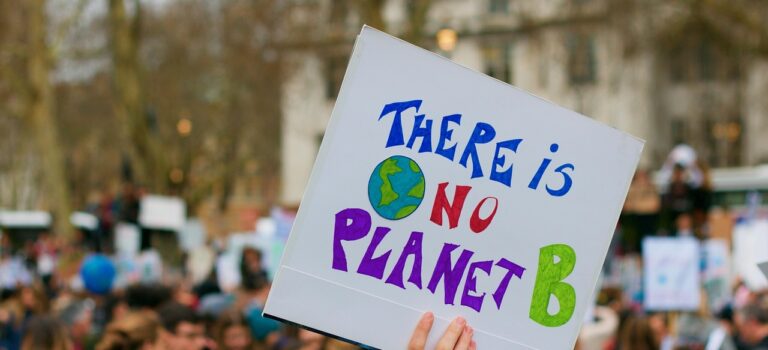
Frustrated by the slow pace of policy action, some climate activists have turned to nonviolent civil disobedience (NVCD), such as blocking roads, engaging in boycotts, sit-ins, and even defacing artwork, to draw attention to the climate crisis. Their goal is to pressure the public and policymakers to treat climate change with greater urgency.
In this article, we investigated the predictors of public willingness in the United States to support and engage in NVCD. Using data from the nationally representative Climate Change in the American Mind survey, we found that collective efficacy (i.e., the perception that a group of people can work together to achieve a specific outcome, such as affecting government action on climate change), anger, identification with climate activists, descriptive norms (i.e., perceptions of what other people are doing to reduce global warming), and exposure to liberal news were positively related to public willingness to support and engage in NVCD. Also, younger people, those with less formal education, and Black and Hispanic people are more willing to support and engage in NVCD than older, more educated, and White people.
Our findings offer valuable insights for social science theorists refining models of protest behavior as well as climate activists seeking to engage more people in NVCD.
These and other findings can be found in the open-access article from npj Climate Action.