Blog · January 6, 2026
YPCCC Partnerships: Interview with WE ACT for Environmental Justice’s Manuel Salgado and Ashley Sullivan
By Emma Buretta
WE ACT for Environmental Justice is a Northern Manhattan-based, membership-driven organization founded in Harlem, NYC whose mission is to build healthy communities by ensuring that people of color and/or low-income residents are meaningfully included in the development of sound and fair environmental health and protection policies and practices.WE ACT has offices in New York and Washington, D.C.
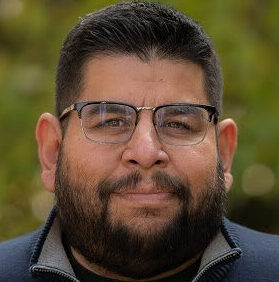
Emma Buretta from YPCCC’s Partnerships Program sat down with Manuel Salgado, Federal Research Manager, and Ashley Sullivan, Senior Communications Manager – Federal Policy at WE ACT, to learn more about their approach to climate communication, their work at the intersection of environmental justice and climate science, and their partnership with YPCCC.

Emma: What led you to where you are now, and how did you get involved in climate work?
Ashley: I had a very meandering road to climate work. I’ve always been passionate about biology, and my undergrad background is in anthropology and biology, which I’ve always seen through the lens of humans being a part of our ecosystem. We really need to learn cross-culturally and interconnectedly about the way that we extract and exploit, or live more sustainably in our environments. I wanted to do science communications, and thought that I could pursue it through traditional communications or nonprofit entities, or through more of an arts trajectory. I ended up doing a program in Madagascar, under Dr. Patricia Wright, who had really innovated in community-led conservation. She had found ways to support people who are living in and around protected areas to establish their own sustainable livelihoods. I realized I could share with broader audiences what folks need to know and how they can get involved in supporting this work at both the local and policy levels.
At the same time, I started working at a social justice organization in New York City, focused on youth filmmaking and storytelling to address social inequities in race, gender, and class. I was in the social justice, science, and conservation spaces, and they were all advancing really strong methods to address root issues, but were still not fully speaking to one another. So, I moved to the Jane Goodall Institute because it was at the forefront of community-led conservation. I realized that the thread I kept trying to return to was environmental justice, which had not reached a ubiquitous point within movements. So I began thinking of how to apply some of these learnings to an Environmental Justice space, and went back to school to study environmental science, policy, and environmental justice. After that, I was basically relentless about applying to WE ACT for Environmental Justice, and that’s how I got here. There are a lot of other pathways I took on my professional journey, including professional pumpkin carving, but I won’t get into that here.
Manny: I had a pretty nontraditional route. I started undergrad when I was 28, and one of the main reasons for that is structural racism. I had always been interested in the weather and atmospheric science. Then I was in San Antonio in 2005 when Katrina happened, and we got a lot of the evacuees there. It was a really transformative summer for me. My then-girlfriend (now wife) did a lot of volunteering for people impacted by Katrina. I decided to go back and study environmental science for undergrad, and then I went to grad school for atmospheric science. The goal was always to do some type of climate work. But I realized in grad school that academia wasn’t where I wanted to end up. So my wife eventually got a job while I was writing my dissertation, and we ended up in DC.
One day, I saw the opening at WE ACT, and it was an opportunity to combine all the science, data analysis, and mapping skills that I had with work that pushed back against racism. So for me, that was a sweet spot. I’d never heard of WE ACT up until that point, and I had an idea of what environmental justice was, but it turned out to be a fairly incorrect idea, a very academic idea of what environmental justice was, but I applied to the position and immediately found myself in a place that I really felt comfortable in and one in which I could thrive. Now I’ve been here for about three years, and I really love the type of work that we do: tackling systemic racism, creating policy, and leading advocacy for communities of color and low-income communities, broadly in the environmental space, as well as climate justice work specifically within that.
Emma: Both of you talked about finding spaces where science and environmental justice intersect. Can you share more about how those two things come together at WE ACT, and how you’re able to communicate the intersection of those two things to other people?
Manny: There’s a lot of history within the environmental justice movement that has been instrumental in highlighting the effects that structural racism in the United States has on how certain communities experience environmental and climate issues. A WE ACT co-founder was one of the first people involved with that research. Our co-founder, Vernice Travis Miller, and environmental justice activist and former Senior Policy Advisor in the Office of Environmental Justice at the Environmental Protection Agency, Charles Lee, led seminal work on the impacts that are felt in communities of color regarding environmental issues including the foundational ‘Toxic Wastes and Race in the United States’ report. WE ACT has always been on a path that is within that space in the Venn diagram, between how structural racism – policies like redlining, that have affected communities of color – and how those interact with the environment. That’s the space that WE ACT acts in. The work we do is in full service of seeking relief for those communities. My work involves studying the extent of that, creating new data when applicable, using that data to inform our policy decisions, and communicating what scientific data means to different audiences. We make sure that we can break down the scientific data from specifically the environmental justice perspective to legislators, legislative staff, our members in New York City, other environmental justice advocates, and the general public. And Ashley is helping me out with the communications aspect.
Ashley: I’m so grateful to have found someone like Manny who has such a technical background as well as an understanding of climate consequences for everyday people. At the policy level, you need data that has been thoroughly validated, but you also need humanized data, and I think that’s something that WE ACT and Manny specifically do really well. I think a lot about the role of storytelling in social justice work. For example, if you were an organization dealing with the impact of HIV and AIDS to create better public health policies, you could share statistics on the impact of HIV and AIDS, but need to show the scale and the experience of it. People remember things when statistics are coupled with storytelling. For something to permeate society, you have to use stories.
What’s so insidious about white supremacy is that it intends to betray our sense of reality so that it can continue a norm that is wrong. Having frontline stories with validated data pushes back against the intentional and insidious way that it tries to erase people’s experiences that justify the need for change and reform. Data also provides a sense of possibility for communications because there is data on not only what is wrong, but also on what we can do to fix it, and what is possible if we project into the future. The structures of white supremacy make folks reactive and responsive, and leave them without the resources to imagine better and to organize better. I think ultimately, if you have a story that’s grounded in data and connects to people’s values and feelings, you can actually get people to change, either you chip away at their worldview, or expand their worldview, or advance connections in ways that activate people. My ability to tell stories is only as good as Manny’s ability to provide really solid data, and all of that comes together to reach people and dismantle the effort of white supremacy to reject our experiences and reality. I’m grateful to Manny for both being such a good storyteller and advocate, but also being such a great scientist.
Emma: You both talked about storytelling as a way of communication. Who are you all mainly trying to communicate with?
Manny: We have a pretty wide range of audiences, and we talk about this a lot when we’re planning out our work, because different projects will have a goal of activating or reaching different people. Sometimes we’re trying to reach legislators, either at the state, local, or federal level. We’re also reaching policy makers and decision makers more broadly, that is, people who are actually empowered to make decisions for the government. That’s a big focus of our work, where we design messaging specifically to reach those people. Other times, we’re trying to activate our membership, generally an environmental justice constituency across the nation or even just locally in New York City or New York State. And that’s a completely different way of communicating to that audience than if you’re talking to policymakers. And then sometimes we’re just trying to reach the general public. That sometimes is a mix of both, but our strategy is similar to what we would do to activate our membership constituency. Those are broadly the three groups. If I were to add a fourth, it would maybe be media. Sometimes you want to make something that catches the eye of reporters and other members of the media, so that they amplify the story, and then it subsequently reaches a general audience.
Ashley: The only thing I will add is academia, but I think that’s more of a partnership where they influence our thinking and contribute insights and data. What’s key to all of those audiences is understanding their prerogative and values. For example, in the “general audience”, there are folks who are already hyped to support what we’re doing and are more inclined to absorb the stories and information we’re sharing. And then there are other folks who are less inclined, and so for them, we need to both reduce technical jargon and wonkiness, but also reinforce the things we know people care about. Our job is to make sure that the way we communicate with those audiences is in a way that makes them feel something resonant to their lives.
Emma: What are your communication goals, and how have you used the Yale Program on Climate Change Communications resources or insights to help achieve those goals?
Ashley: Our broad goals really depend on that audience base. A part of it is supporting our members. We’re the hosts for the Environmental Justice Leadership Forum, which is a group of 44 environmental justice organizations from 22 states. Our goal with this Forum is to help amplify their stories and be a conduit for Capitol Hill and broader audiences. Especially with our work on the Hill, our goal is to make sure that policymakers know what environmental justice and climate justice really are.
We’re also in a lot of groups that have climate as a broader goal, and something we’re trying to change is that we are often the only environmental justice group in the room. Also, for a lot of policymakers, Environmental Justice can feel like a talking point or a buzzword. They have the perception that it’s not tied to tangible impacts and their specific constituents, when it really is. So we are trying to do a lot of fluency work, to build better involvement in and better implementation of practices for environmental justice within climate spaces and climate policy.
YPCCC’s research has provided us with excellent talking points, especially during our conversations on the Hill, because when we’re talking to policy makers, they want to know the attitudes of folks within specific demographics and groups that are being tested in terms of approvals, disapprovals, what resonates, and what doesn’t. So being able to deliver that polling research is very persuasive. It’s been very helpful for the media as well, when you have evidence (from Climate Change in the American Mind: Climate Justice) that the majority of Americans support climate justice programs, that’s a really useful talking point, especially at this time when climate justice is being vilified and targeted politically. I think that the tension between the goals of this administration and where public opinion stands on this issue appeals to the media and to the broader audience that we’re trying to mobilize.
Manny: WE ACT’s mission is to build healthy communities by ensuring that people of color and/or low-income residents participate meaningfully in the creation of sound and fair environmental health and protection policies and practices. As per the official mission posted on our website, WE ACT “envisions a community that has:
- Informed and engaged residents who participate fully in decision-making on key issues that impact their health and community.
- Strong and equal environmental protections.
- Increased environmental health through community-based participatory research and evidence-based campaigns.”
It’s a fantastic mission statement that clearly says what our goals are and what we really advocate for.
For the YPCCC data, I found it useful in a couple of ways for us, especially since the most recent election. But even going back before the election, while we got more funding for environmental justice through the Biden administration, and more exposure for environmental justice work than we’ve ever had before, at some point, we started to see some pullback in terms of doing environmental justice work, which has continued under the current administration. So what has been fundamentally great about the work that you guys have done is that it highlights how popular a lot of the individual climate justice policies are. Even extending beyond that, some of the work that YPCCC just released shows how much people are in favor of addressing the environmental disparities that we focus on. That research has been really helpful in pushing back against narratives that are trying to pull back from environmental justice and climate justice work. We can use this research directly with decision makers and with other allies as well, to show that we don’t need to pull back from this because it’s extremely popular. We should actually be doubling down on this moving forward. I feel quite vindicated that some of the most popular politicians in the country are people who do just that. Up in New York City, we saw the recent mayoral primary election that reflected that as well.
There’s always a narrative that festers, that wants to pull back away from this type of work and retreat to a more status quo middle ground. But the data that we’ve developed in conjunction with you, and data that you developed before we came along, makes it clear that that’s not what should be happening, and that’s not what people want. Our work together investigating the term “climate justice” through the Climate Change in the American Mind: Climate Justice report, specifically highlighted an important education opportunity since a lot of people aren’t familiar with what climate justice is, and that it’s up to us to define that term before somebody else defines it for us. This data is really helpful when we think about how we should be messaging and how to communicate with a more general audience that isn’t yet activated, but just needs a nudge or some education in the right direction to be just as supportive as the fiercest climate justice warriors out there. Those are two ways that I found the data extremely helpful.
Emma: What do you think WE ACT does well as a climate communicator that other people trying to communicate on climate could really learn from?
Manny: Having spent time in academia, being a person of color who comes from a different background than a lot of people who make up mainstream physical sciences, especially Earth Sciences, I have a different perspective. And it’s a perspective that’s informed by the lived experiences of growing up as a brown man in this country and living in communities that aren’t typically represented in a scientific department university, or in academia at large. WE ACT is full of people with that perspective, and WE ACT’s full mission is built around educating everyone else on what it means for communities of color to exist in the United States in an environmental and climate context. So what WE ACT does really well is it goes into these spaces that have typically been reserved for organizations or academics that are not community based, that are not based in communities of color, and brings those experiences in and explains to people how the systems that are in place might leave communities of color behind and how they’re impacted by the status quo.
A lot of scientists have the best intentions of addressing these issues, but they still have blind spots because they don’t come from the same background. You just can’t understand these communities without understanding their perspectives. So you have to communicate with people within them, you have to come to them, or you have to come from them. We all exist within bubbles, and the only way to understand what’s outside of your bubble is to talk to people from outside of it, or incorporate people who exist outside of your bubble into your space. WE ACT excels at that. We’ve successfully brought these perspectives to coalitions and legislators at all levels of government and in spaces where these perspectives weren’t present in high numbers before, and it’s had a huge impact. Bringing environmental justice into spaces that aren’t familiar with it is essentially what we do. And it’s been really successful. I’m constantly amazed at what my colleagues here are able to accomplish on that front.
Ashley: Absolutely, and a lot of what I’ve seen in different movement spaces is very broad messaging that is both greenwashing and misguided when it comes to climate change and the way in which we have to address it. For example, there’s the notion that we have to “save the planet” or “people are killing the planet”. I think that the abstract idea of a “planet” is very misleading. It doesn’t connect with people individually because it’s such an abstract concept, and it misrepresents the systems at play and is misleading regarding who is actually contributing, who is being the most impacted, and how it’s actually happening.
WE ACT does the reverse of all of that. This is because WE ACT started in a community in Harlem, NYC with a very practical and tangible issue and scaled out to talk about the way in which all systems of oppression and inequity are connected in a very easy-to-digest and everyday way.
I really love and think a lot about the 17 Principles of Environmental Justice, and that framework that was developed in 1991 still holds true. If you were to accomplish those 17 principles, you would accomplish an equitable climate framework and a just transition for everyone in an appropriate way. That’s one thing that I hope climate communicators can think about: these aren’t abstract concepts or distant issues and systems. These are real, everyday issues. Everything about the way WE ACT communicates is based on real stories, directly from the folks who are being impacted. That stems from the founders of WE ACT: Vernice Miller-Travis was a researcher living in that community. Peggy Shepard was a journalist and political organizer, along with the lateChuck Sutton both Democrat District Leaders for and from Harlem, NYC. Chuck was also a journalist, community organizer and co-executive producer of “It’s Showtime at the Apollo.” So this approach comes through in the way that they talk and think about this work. For instance, Vernice talks a lot about her experience trying to explain what she does to her mom, who was a nurse. I’ve also tried to explain what I do to my mom, who is not a nurse, but is an at-home care assistant, and I, at one point, showed her global temperature growth and spikes over time. I realized as soon as I showed it that the chart was meaningless to her. But if I told my mom from South Brooklyn, how the people in the Toxics Tour that we just went on in Louisiana, were living next to 15+ industrial sites with a proposed plastics plant and about their resulting health struggles, that would hit in a very different, empathy-based way. So ultimately, WE ACT’s philosophy is to support people in telling their stories.
Emma: How do you remain hopeful and inspired?
Ashley: We were just at the Environmental Justice Leadership Forum convening in New Orleans, and there was a point where one of the participants got very emotional. At that moment, I was really trying not to cry; a lot of us were trying not to cry, but many of us did. What made me hopeful about that is that environmental justice movements are the space for all of those feelings. It is a space to process and to support each other, and to cry together and laugh together. A lot of spaces can feel very cold and productivity-driven, and policy can feel like a political game sometimes. So it makes me hopeful that the environmental justice movement is very human, and that is where it has its power, and it is something that I hope we can protect.
Manny: For me, I would say that what makes me hopeful are my colleagues here at WE ACT, which I say all the freaking time, but I legitimately mean it. It’s the most amazing group of people that I’ve ever worked with, the most ambitious and skilled, and transformative group of people that you could imagine. It’s phenomenal. I’m always inspired by the work that they do. I also extend that to the environmental justice movement at large. It’s people who aren’t always experts in a particular field. It’s people who just have issues a lot of the time in their own communities, and are driven to fix them because nobody else will. And so it’s simultaneously a space that is very inspiring, but not always one that is based on hope. Because the truth is that a lot of these communities have been ignored for a long time. What I find amazing is that, regardless of how people have been treated or what the odds are, they remain committed and they’re successful so often. It’s just an amazing quality to have within a community. It’s impossible not to be inspired by that when it’s all around you.
We thank Manny, Ashley, and WE ACT for Environmental Justice for sharing their time and perspective, and for their commitment to environmental and climate justice solutions.