Blog · September 9, 2026
YPCCC Partnerships: Interview with Extreme Weather Survivors’ Amanda Rosa
By Monica Dwight
Extreme Weather Survivors tells the stories of everyday people who have been impacted by extreme weather events. Through community-building, resource-sharing, and advocacy, they elevate the voices of those who have been directly affected and empower them to advocate against the worst impacts of the climate crisis. Through trauma-informed support groups, they also help survivors to heal. They go beyond the traditional model for storytelling, leading with authenticity as one of their greatest powers. Founded just two years ago in 2023, they’re working to ensure survivors are supported and their stories are heard.
Monica Dwight from YPCCC’s Partnerships Program recently interviewed Amanda Rosa, Director of Outreach at Extreme Weather Survivors, to learn more about the organization’s approach to climate communication, successes and challenges of engaging their audiences to spark climate action, and their partnership with YPCCC.
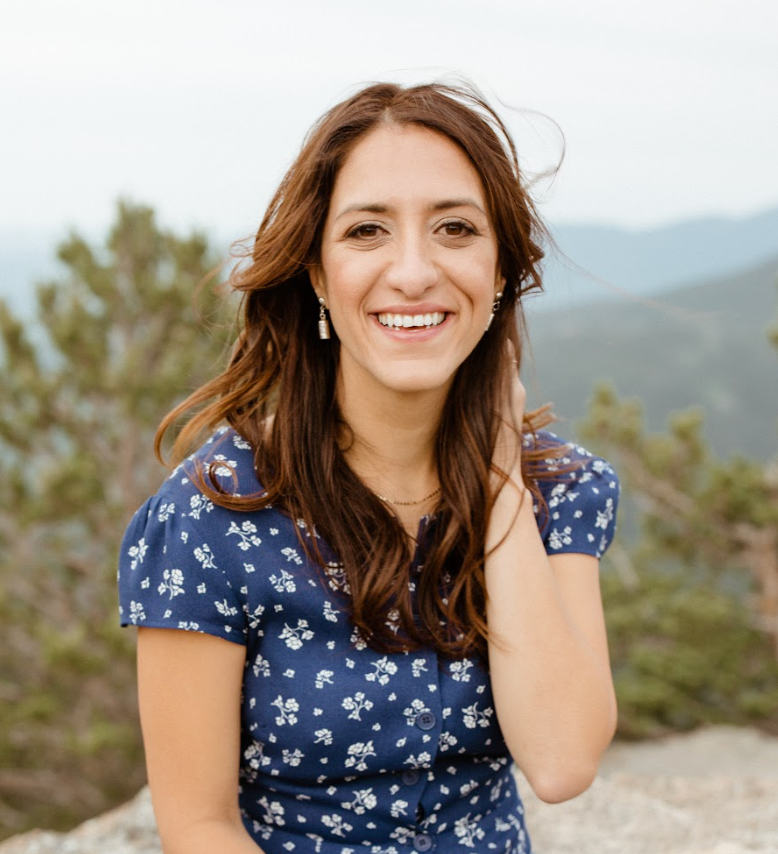
Monica: Your career spans many different content areas. How did you decide to work on the climate crisis?
Amanda: My background is in journalism and social justice filmmaking, so my work was always about amplifying the most impacted and least heard voices. Whether it was youth in detention centers, or people on death row, I worked in both the incarceration and political spaces. When I started a family, I began to be drawn to the climate crisis. What drew me to the climate crisis is that it touches all of those same justice issues I’d been working on: housing, health, poverty, and race.
Often, we tell climate stories with charts instead of people. What I really liked about Extreme Weather Survivors is it brings storytelling back to its roots of human connection, lived experience, and truth-telling that really moves people emotionally and encourages them to act. I believe that storytelling isn’t just soft power, it’s structural power. And I was really drawn to the emotional thread being connected via storytelling when it came to climate. And if I’m being honest, I’m just very convinced that this issue is so existential. Other issues depend on it. It sounds trite, but having kids made me realize that if there’s something I’m going to try to affect with the stories I tell, I really want it to be climate.
Monica: What audiences does Extreme Weather Survivors seek to engage?
Amanda: The people we’re trying to connect with and to represent are those who are least represented in traditional climate spaces: the survivors. We believe that survivors know what’s broken, they know what’s needed, and it’s our job to help them organize, heal, and be heard. It’s important for us to listen to them as experts and not just recipients of aid. This is a big part of our theory of change. Sometimes this starts in a Slack community. For the Los Angeles wildfires, we engaged with the survivors of that fire and created opportunities for them to talk with folks from the Marshall fire in Colorado, which was the biggest fire in their state history. Sometimes it’s in a Facebook group, like the one we host for extreme heat where people across the country gather to swap real-time info, resources, and offer solidarity. Sometimes it starts in a WhatsApp group for pregnant moms trying to navigate heat. We also try to build out tools like clear, accessible guides for what to do before, during and after disasters, because that information shouldn’t really live in the PDF on a website. It should be easy and accessible for folks. We work alongside survivors, holding spaces for grief and shock through free trauma support calls with mental health professionals and survivors. For example, last night’s call was led by a woman named Gina Heath, who’s a mother and trauma specialist who lost her home and her neighbor during Hurricane Helene, and is now helping other families survive what she’s already lived through. We follow the lead of the folks who are living through the disasters. They can really see the holes in the system and we try to amplify their voices.
Monica: A big part of Extreme Weather Survivors’ theory of change is based on embracing community as a motivator for climate action. How do you engage survivors directly to build community? What is the vision and hope for these communities?
Amanda: For us, community isn’t just a value, it’s the method. We don’t start with the storytelling, we start with support. That way, the stories emerge in a more powerful way. They then become the folks leading the charge on change.
We did a lot of work during the wildfires in Los Angeles around insurance. And the reason we did that is because it was what was really troubling people: insurance really brought people to their knees, it really made people cry, it was just so frustrating to be paying into this system but not getting the payouts when they were due, particularly for folks who had smoke damage. They couldn’t really live at home, but they were unsupported, and their situation was a little more unclear. So when rate hikes went through, they felt like it was wrong, because, for one, they paid into a system that wasn’t paying them out, but also, nothing was resolved even at the time the rate hikes were approved. But because of the social pressure they put on the Commissioner, they opened up an investigation into State Farm, which was one of the bad-acting insurance companies. So we see it work where if we organize to bring together these various experiences with common threads, then these groups can take action, and then they can help other communities to take action as well. For us, it really starts with just supporting them, meeting them where they’re at, and really listening to them.
Monica: You mentioned earlier that you’ve always been focused on amplifying the least heard voices. As you work with a population that is exposed to so much undue and unjust harm, how do you elevate diverse voices?
Amanda: We don’t just feature stories, we co-create them with survivors. We build trust and offer tools like media training, and emotional safety planning. So we’re not asking people to relive trauma. We’re helping them reclaim their narrative and shape policy or framing in the process. Whether it’s a mom in Houston whose son survived the flood or a grandmother in Phoenix, choosing between medication or air conditioning. We support people in telling their stories on their own terms, and then amplify them through press, public comment, or even legislation.
Monica: How has your organization used YPCCC resources or insights to advance its work?
Amanda: The YPCCC helps us understand not just what messages work, but why they’re effective. YPCCC’s work on trusted messengers and emotional resonance reaffirms what we see on the ground; people don’t respond to statistics alone. They respond to stories that reflect their own lives. And we’ve used YPCCC findings to shape our narrative strategy, to train survivor spokespeople, and to better frame the climate crisis as a health and justice issue, especially when it comes to families of color. The YPCCC provides the background and research to help us frame stories for people in the climate space and the general public.
Monica: What’s something unique that really works for Extreme Weather Survivors that other climate communicators could learn from?
Amanda: There are two things. One is treating survivors as more than sources, and thinking of them as strategists. And also holding space for healing before advocacy. It’s not just about the messaging, but making sure the messenger is supported, resourced, and ready. The human-centered approach makes everything else stronger, whether we’re building peer networks, briefing reporters, or having them testify in front of the Senate judiciary.
We also embrace not knowing what we don’t know. As a movement, climate can be really prescriptive in how people should speak about things and I have found that the most moving ways people talk about things are never based on a prompt. They’re how real people put it. When I think about extreme heat, it’s tough because a lot of extreme heat is happening in places that have always been hot, like Arizona. But hearing somebody say, “I know I live in a hot place, but I played outside as a child in the summertime. But if I let my child play outside this summer it would be child abuse.” Things like that are just so much more powerful.
So I just think that not knowing what you don’t know, and not anticipating what will be the strongest thing can really be learned from just being out in the communities and talking to people. And realizing that if you haven’t evacuated your home, or lost your home, or lost your community, the way you’re going to speak about things is different than people who have and it could not land as well as what they authentically would say themselves about the same thing in their own way.
A lot of what trauma is, it’s a loss of control. So if we’re trying to control what is being said, that’s not going to work. That’s just adding onto the trauma. With weather, you don’t have control over what happened or how it happened. You don’t have control over whether it affects your neighbor and not you, or you and not your neighbor. Authenticity without curation is important to enlist people in a movement that can make a big difference.
Monica: What has been your organization’s single most exciting or surprising discovery you made in communicating about climate?
Amanda: I think one of the most powerful discoveries is how quickly trauma can become power if the right support is there. We’ve watched survivors go from breaking down in a support call to testifying before the Senate judiciary, and briefing FEMA leadership in a matter of months. When people are given the space to feel, heal, and then speak, their stories can move people. The advocacy isn’t separate from the emotion, it comes from it. Their power is their humanity. And this is something I’ve witnessed time and time again.
Monica: You all do some really heavy work, and also probably talk with some really amazing, resilient, and strong people. How do you retain hope and inspiration to do the work that you do in the climate space?
Amanda: I think that it’s trite, but it’s true–it’s the people. Every day we see people refusing to give up. People like Emma in Phoenix, who went through pregnancy without air conditioning, and now leads community health workers house to house to help other women survive. Or Benjamin who lives in Belgium who lost his best friend in a flood. She was literally torn from his arms, and now he shows up for families in Texas who are grieving on their own. So we’re not inspired by the politics. We’re really inspired by each other. And it’s really easy to keep going when you’re constantly talking to people who are showing you their resiliency. When there’s distance from it, and you’re just taking in the information, it can be really depressing. But then, when you talk to people who are going through it, and you see all the sides of them, the sides that are hopeless, the sides that are hopeful, the humanity of it all becomes something that is just very inspiring and very moving. It really keeps us going when we see the impact of them helping each other, helping push policy, helping be the change that they wish they would have had. There was one person on our Slack network from the California wildfires who said, “You know, if given the choice between a guide or a map, I’ll take a guide every time,” and that really sticks with me as what hope looks like, when you have people helping people.
Thank you to Amanda Rosa and Extreme Weather Survivors for their time and their work amplifying the voices of survivors, creating community bonds, and empowering those impacted by climate-induced extreme weather events.